Witch Hat Bow Template: A Designer’s Review
As a professional embroidery designer and product reviewer, I approach every new asset with a critical eye toward production viability. When evaluating the Witch Hat Bow Template, my first thought is not just about its aesthetic appeal for Halloween, but how it translates from a digital 3D SVG concept into a tangible, stitchable reality. This template falls under the Shapes category, but its application goes far beyond simple geometry. For small business owners, Etsy sellers, and makers, understanding how this specific bow structure interacts with thread and fabric is the difference between a failed test stitch and a best-selling seasonal item.
First Impressions and Seasonal Versatility
The Witch Hat Bow Template immediately establishes a playful yet structured mood. Unlike generic holiday clip art, this design offers a distinct silhouette that reads clearly even from a distance. In my initial assessment, the shape feels balanced enough to serve as a standalone motif on a baby bib or as an accent piece on a larger tote bag design. The visual personality is whimsical without being juvenile, making it appropriate for both children’s apparel and adult boutique accessories.
For creative entrepreneurs, this versatility is key. A successful machine embroidery design must work across multiple product lines to justify the investment. This template possesses the structural integrity needed for custom apparel while retaining enough charm for personalized gifts. It avoids the overly complex shading that often causes registration issues in embroidery, suggesting it was designed with stitch clarity in mind rather than just vector aesthetics.
Real-World Application: The Sweatshirt Test
To truly evaluate this asset, I mentally placed it in a real-life production scenario: creating a batch of autumn-themed sweatshirts for a local craft fair. Sweatshirt fleece is notoriously tricky due to its pile and stretch. When applying the Witch Hat Bow Template to this substrate, the design’s bold lines are an advantage. Thin, intricate details often get lost in fleece texture, but this bow’s defined edges allow for a clean satin stitch border that anchors the design effectively.
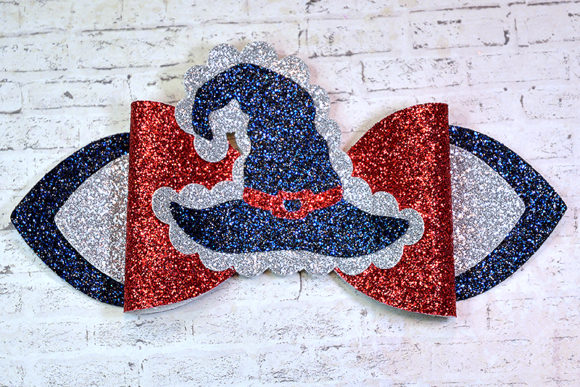
In this scenario, I would utilize the template as an applique design. Using faux leather or glitter vinyl, as suggested by the product parameters, adds a premium tactile element that elevates the perceived value of the finished product. Customers at craft fairs respond to mixed media; seeing a soft cotton sweatshirt accented with a shimmering witch hat bow creates immediate interest. However, because this originates as a 3D SVG intended for cutting machines or scissors, the transition to embroidery requires careful planning. You must ensure your embroidery file includes proper tack-down stitches and placement lines if you are converting this cut file for needlework. Without these technical guides, aligning the physical material within the hoop becomes a guessing game that wastes time and materials.
Navigating Fabric Constraints and Hoop Limitations
While the Witch Hat Bow Template is adaptable, it demands respect for fabric physics. I advise caution when using this on highly textured fabrics like terry cloth or boucle unless you employ a heavy-duty water-soluble topping. The sharp points of the hat and the curves of the bow require precise stitch definition; if the fabric pile pushes through the stitches, the crisp silhouette will blur.
Hoop size is another critical consideration. If you are working with small hoop sizes, such as those on single-needle machines or multi-needle cap frames, scaling down this template requires scrutiny. Reducing the size too aggressively can cause the satin stitch columns to become too narrow, leading to thread breaks or a stiff, bulletproof feel. Conversely, enlarging the design for a large tote bag design may expose gaps in fill stitch areas if the original digitizing did not account for expansion. Always verify the minimum and maximum safe resize limits before committing to a commercial embroidery run.
Stretchy fabrics present their own challenges. When embroidering this bow onto ribbed knit or performance wear, the tension of the satin stitch outline can distort the garment. In these cases, I recommend using a cutaway stabilizer rather than tear-away to maintain long-term stability. The goal is for the handmade product to look as good after washing as it did coming out of the hoop.
Commercial Value and Brand Consistency
For Etsy sellers and shop owners, consistency builds trust. The Witch Hat Bow Template serves as an excellent recurring motif for building a cohesive holiday collection. Because the shape is distinct, it aids in brand recognition. When customers see that specific bow profile on a nursery pillow cover, a mom-and-me matching set, or a holiday gift tag, they associate it with your shop’s quality standard.
However, professionalism extends beyond the stitch-out. Before listing any finished product derived from this template, you must confirm licensing terms. While the description mentions use for hair bows, tie bows, and decor, it does not explicitly detail commercial embroidery rights for digitized versions. As a responsible business owner, never assume permission. Verify whether the digital embroidery file allows for selling physical goods or if it is restricted to personal use. This due diligence protects your shop from intellectual property disputes and maintains your reputation in the maker community.
Essential Designer Notes for Production Success
Based on my evaluation, here are practical steps to ensure the Witch Hat Bow Template performs beautifully in your studio:
- Test Stitch First: Never run a final production piece without a test sew-out on similar scrap fabric. Check for registration shifts between the placement line, tack-down, and finish stitches.
- Evaluate Contrast: Test thread colors against both light and dark backgrounds. A black witch hat on navy fabric lacks impact; consider outlining with metallic gold or silver running stitch to define the edges.
- Check Density: If converting from SVG to embroidery yourself, monitor stitch density. Glitter vinyl and faux leather are dense materials; stitching over them requires adjusted tension and potentially a larger needle size to prevent skipped stitches.
- Mockup Validation: Use printable mockups to visualize scale before hooping. Seeing the bow proportionally on a digital shirt template helps avoid sizing errors that waste stabilizer and thread.
- Stabilizer Selection: Match your stabilizer to the end-use. Tea towels and kitchen items need wash-away stabilizers to remain absorbent, while caps and bags benefit from firm tear-away or fusible mesh.
- Detail Inspection: Zoom in on the digital file to inspect corner points. Sharp angles in embroidery can cause puckering; rounding internal corners slightly in the digitizing software can improve lay-flat quality.
Final Thoughts for Makers and Sellers
The Witch Hat Bow Template offers significant potential for seasonal revenue and creative expression, provided it is treated with technical respect. Its strength lies in its clear silhouette and adaptability to mixed-media techniques like applique. Whether you are creating a personalized gift for a client or stocking your shop with holiday inventory, success depends on understanding the relationship between the digital shape and the physical stitch.
Remember that a beautiful screen image does not guarantee a beautiful embroidered patch. Take the time to validate your materials, secure your licensing, and refine your stabilizer strategy. By approaching this design asset with the rigor of a professional reviewer, you transform a simple shape file into a high-value component of your embroidery business. The result is a finished product that delights customers and stands up to the wear and tear of real life, cementing your status as a skilled and reliable maker.